
How to Build a Simple Weekly Deal Flow Update for Your Buyers, Lenders, and Partners
Learn how to create a simple weekly deal flow email that keeps your buyers, lenders, and partners informed and engaged. This practical guide shows you what to include so your network can quickly spot opportunities, offer support, and help move your deals forward.
A strong network can be the difference between a deal that closes and one that quietly falls apart.
Most creative finance investors and wholesalers already know plenty of buyers, private lenders, agents, contractors, closers, and fellow investors. The problem is that those contacts usually have no idea what's actually happening inside your business.
They don't know you have a seller finance opportunity that needs a buyer. They don't realize you're looking for a private lender for a short-term gap funding need. They have no clue you're sitting on a complicated deal that could benefit from an experienced closer.
A simple weekly deal flow update fixes that.
You don't need a polished newsletter or a long, carefully designed email. A short, organized message sent consistently can keep your network warm, spark conversations, and turn quiet contacts into active opportunities.
Why Weekly Deal Flow Updates Work
People can't help you with opportunities they don't know about.
A buyer might be looking for exactly the type of property you're working right now. A lender might have funds sitting available for a deal that fits their criteria perfectly. A partner might know someone who can solve the specific problem you're stuck on.
But your contacts are busy. They're not thinking about you every day. They don't remember every detail from a conversation you had three months ago, and if they haven't heard from you recently, they may assume you're not actively working on anything.
A weekly update gives your network an easy, low-effort way to see where they can plug in. It also positions you as someone who is active, organized, and worth paying attention to.
Keep the Format Simple and Consistent
Your weekly update shouldn't feel like homework to read. The goal is for someone to scan it in under two minutes and immediately understand where they can help.
Use the same subject line format and the same sections every week. Something like:
Subject: Weekly Deal Flow Update | Opportunities, Funding Needs, and Wins
Send it on the same day each week. Tuesday morning or Thursday afternoon both work well. Consistency matters far more than perfection here.
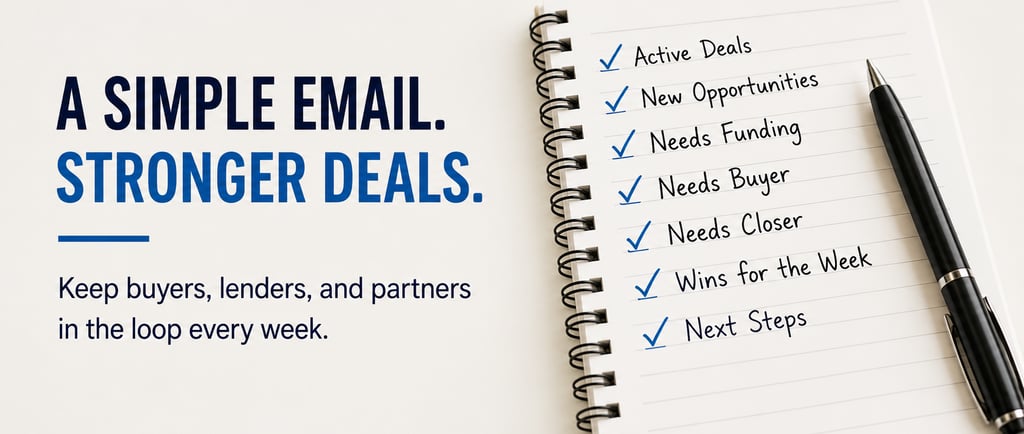
Here are seven sections that keep the format clean and useful.
1. Active Deals
Start with what's currently moving.
Keep it brief. Your network doesn't need seller details, exact addresses, or sensitive financial information. They need just enough context to understand the opportunity and whether it's relevant to them.
For each active deal, cover:
Property type and general market
Current stage
Exit strategy
Most recent milestone
Immediate next step
Example:
East Tennessee Tiny Home | Seller Finance Under contract and completing due diligence. Reviewing short-term rental numbers and building out the funding structure. Next step: finalize the private money piece for closing costs and initial reserves.
This section tells your network you're active, you follow through, and deals are actually moving.
2. New Opportunities
Use this section to highlight deals that recently entered your pipeline.
These don't have to be under contract yet. They might be leads you're evaluating, properties where you're working out terms, or opportunities you're getting ready to send to buyers. Give people an early look at what's coming.
Cover:
Property type
Location or market
Approximate price range
Potential strategy
What makes it interesting
Example:
Jacksonville, Florida Single-Family | Potential Subject-To Reviewing a low-interest existing mortgage with a motivated seller. Could be a strong lease option exit if the payment, condition, and seller expectations align.
3. Needs Funding
Don't bury your funding needs inside a paragraph. Make them impossible to miss.
A lender should be able to spot the amount needed, the purpose, the expected term, and the repayment plan at a glance.
Example:
Funding Needed: $45,000 Private Money Loan Use of funds: acquisition gap and closing costs Term: 6 to 12 months Exit: refinance, resale, or payoff from operating income Property type: tiny home near a short-term rental market
You don't need to pack every detail into the email. Just add a simple call to action:
Reply to this email if you'd like the full deal summary.
4. Needs Buyer
When you have a property you're looking to assign, novate, resell, or pass to another investor, spell out exactly what you're looking for.
Cover:
Market
Property type
Approximate price
Strategy
Ideal buyer profile
Example:
Buyer Needed: Jacksonville Lease Option Opportunity Three-bedroom single-family with a low monthly payment. Best fit for an investor experienced with tenant-buyers or long-term creative finance holds.
This is also a great spot to remind people they can send you their updated buy box so you know what to bring them first.
5. Needs Closer or Partner
Some deals need more than funding or a buyer. A seller conversation might need a more experienced negotiator. A larger opportunity might need an operating partner. A specific asset class might need someone with hands-on experience you don't have yet.
Be direct about what you need.
Example:
Closer Needed: Seller Finance RV Park Conversation Looking for an experienced closer to join a follow-up call and help structure a win-win proposal. Seller is open to terms but has firm expectations around the down payment.
The more specific you are, the easier it is for someone to raise their hand or make an introduction.
6. Wins for the Week
Don't skip this section.
Your wins don't need to be dramatic. Small, consistent progress builds credibility and keeps your network engaged over time.
Wins can include:
A signed contract
A strong seller conversation
A new lender relationship
A completed underwriting review
A buyer added to your list
A closed deal
A lesson from a deal that didn't work out
Example:
Win of the Week: Completed preliminary underwriting on three new opportunities and connected with two lenders interested in creative finance deals.
Celebrating progress shows momentum without making the email feel like a promotional blast.
7. Next Steps
Finish with a quick look at what you're focused on in the coming week.
Example:
Next Week's Focus: Finalizing funding options for one active deal, following up with two motivated sellers, and connecting with buyers interested in East Tennessee and Northeast Florida opportunities.
Then close with one clear invitation:
Have a buyer, lender, or partner connection who might be a good fit? Reply to this email and let's talk.
Build a Simple System Behind the Email
Your weekly update is much easier to write when your CRM is organized.
Create tags or pipeline stages for:
Active deals
New opportunities
Needs funding
Needs buyer
Needs closer
Follow-up required
Closed or completed
Set aside 20 minutes each week to review your pipeline, update the status of each deal, and pull the most relevant items into your email. Save a reusable template so you're never starting from scratch.
Stay Visible Without Being Pushy
You don't need to send constant sales messages to stay top of mind.
A useful, consistent deal flow update gives your contacts a real reason to open your emails every week. Real opportunities. Clear asks. Visible progress. Over time, your network starts to understand what types of deals you work on, what resources you need, and how they can participate.
The next buyer, lender, closer, or partner you need is probably already in your contact list.
They're just waiting for you to tell them where they can help.