
How to Organize Seller Leads So No Opportunity Falls Through the Cracks
Seller leads often get lost when follow-up is not organized. Learn how to use a simple seven-stage pipeline to track every opportunity, schedule next steps, and keep motivated sellers from falling through the cracks.
Most real estate investors don't have a lead problem. They have a follow-up problem.
A motivated seller fills out a form, responds to a cold call, or sends a message asking about an offer. You speak with them once, jot down a few notes, and plan to circle back. Then another deal gets urgent. New leads come in. A closing needs your attention. A week turns into a month, and that seller lead quietly disappears inside a spreadsheet, an inbox, or a CRM nobody is actively using.
The opportunity might still be there. You just lost track of it.
This is especially common for wholesalers and creative finance investors because not every lead is ready for an immediate cash offer. Some sellers need time. Some come in with unrealistic expectations. Some are open to seller financing or a subject-to structure but need several conversations before they feel comfortable moving forward.
A simple lead flow system keeps those opportunities visible until the timing is right.
Use One Clear Pipeline for Every Seller Lead
Your seller lead pipeline doesn't need to be complicated. You don't need 25 stages or a heavily customized CRM before you can get organized.
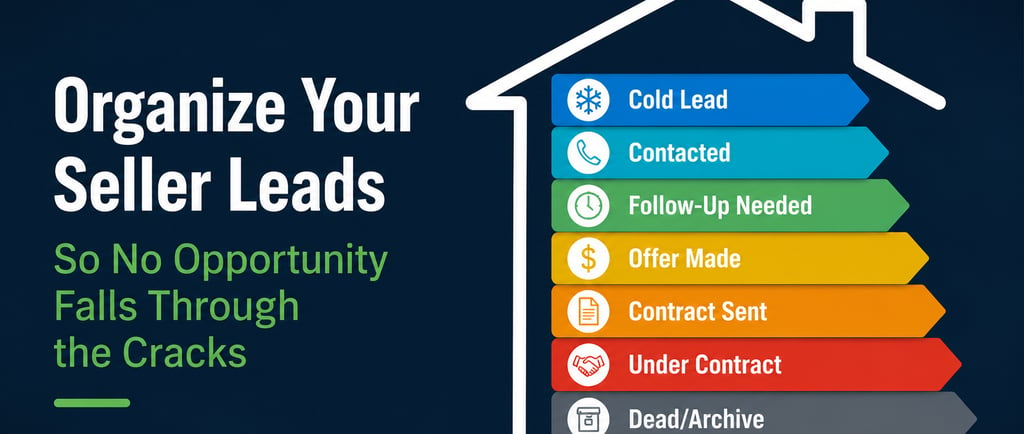
Start with seven stages:
Cold Lead → Contacted → Follow-Up Needed → Offer Made → Contract Sent → Under Contract → Dead/Archive
Every seller lead gets assigned to one stage. Every active lead also gets a clear next step and a follow-up date.
That alone will stop most opportunities from falling through the cracks.
Stage 1: Cold Lead
A cold lead is a seller you haven't spoken with yet.
This might be a new website inquiry, a lead from a marketing list, a referral, a property from a driving-for-dollars route, or a seller who responded to a text campaign.
Your only job at this stage is to make the first contact attempt.
Track the seller's name, phone number, property address, lead source, and the date the lead entered your system. Add brief notes after every call, text, or voicemail attempt.
Don't let cold leads sit untouched for days. Build a daily routine for working through new leads. A lead can't move forward until someone starts the conversation.
Stage 2: Contacted
Move a lead to Contacted once you've actually spoken with the seller or received a meaningful response.
Now you're gathering the basic information you need to decide whether the opportunity is worth pursuing:
Why is the seller considering selling?
What's the condition of the property?
Is it vacant, tenant-occupied, or owner-occupied?
How quickly does the seller want to move?
What price do they have in mind?
Is there an existing mortgage?
Would they consider flexible terms?
For creative finance investors, this stage is critical. A seller who rejects a low cash offer might still be open to monthly payments, seller financing, a lease option, or another structure that actually solves their problem.
Your notes should capture more than property details. Record the seller's motivation, concerns, preferred communication style, and any personal timing issues that could affect the deal later.
Stage 3: Follow-Up Needed
This is one of the most valuable stages in your entire pipeline, and also the most neglected.
A lead belongs in Follow-Up Needed when the conversation isn't over but the seller isn't ready to move today.
Maybe they need to talk to a family member. Maybe they're waiting for a tenant to move out. Maybe they want to try listing the property first. Maybe they just need more time to trust you before they sign anything.
None of those are reasons to mark the lead dead.
Every lead in this stage should have:
A specific follow-up date
A reason for the follow-up
A short note about the last conversation
A clear next action
For example:
"Follow up June 15. Seller wants to discuss the offer with her sister. Ask whether they reviewed the seller financing option."
That's a useful note. "Call back later" is not.
Your CRM should generate a daily follow-up list. Each morning, focus on the leads that need attention that day instead of scrolling through your entire database trying to remember who needs a call.
Stage 4: Offer Made
Move a lead to Offer Made once you've presented a clear offer to the seller.
Record every detail in your CRM: purchase price, down payment, monthly payment, interest rate, balloon payment, closing timeline, and any important conditions.
With creative financing, you might present more than one option. A lower cash price alongside a higher seller-financed price with monthly payments, for example. Track each option clearly. You or anyone helping with follow-up should be able to open the record and immediately understand what was discussed.
Don't assume that a seller who doesn't respond right away has passed on the deal. Many creative finance deals come together after multiple conversations. Before you get off the call, set the next follow-up date.
Stage 5: Contract Sent
Move the lead to Contract Sent once the seller has agreed verbally and you've sent the paperwork.
This stage exists for one reason: to make sure signed-contract opportunities don't get buried in an email inbox somewhere.
Track:
The date the contract was sent
How it was delivered
Whether all decision-makers received it
Any questions the seller raised
The date you'll follow up if it's still not signed
A verbal yes is not the finish line. Until the agreement is signed, the lead stays visible and the communication continues.
Stage 6: Under Contract
Once the paperwork is signed, move the lead to Under Contract.
Now your focus shifts from seller follow-up to deal execution. Track the closing date, title company, inspection and due diligence deadlines, buyer status, funding needs, and any open tasks.
For wholesale deals, this means marketing the property to buyers and managing assignment paperwork. For creative finance deals, you may need to coordinate servicing, insurance, entity documents, or lender conversations.
Keep the seller updated throughout the process. Consistent communication builds confidence and dramatically reduces the risk of last-minute surprises.
Stage 7: Dead/Archive
Not every lead becomes a deal. That's just the business.
Move a lead to Dead/Archive when the property has already sold, the seller has clearly asked you to stop contacting them, the opportunity doesn't fit your buy box, or the situation simply isn't workable.
Add a short reason before you archive it. Over time, those notes will help you spot patterns in your marketing and sharpen your process.
Some archived leads are still worth revisiting down the road. A seller who had no motivation six months ago might be in a very different situation today. Use tags like "Revisit in 90 Days," "Price Too High," or "Listed with Agent" to keep future possibilities organized and easy to find.
The One Rule That Keeps Your Pipeline Moving
Every active seller lead should always have three things:
A stage. A next step. A follow-up date.
When those three things are missing, leads get forgotten. When they're consistently updated, your CRM becomes a practical tool that actually drives revenue instead of a cluttered database nobody trusts.
You don't need a perfect system to get started. Build a simple pipeline, clean up your existing leads, and commit to checking your follow-up tasks every single day.
The money is often already sitting inside your lead list.
The goal is to make sure nothing gets buried before you have the chance to close it.