
Stop Doing All the Admin Yourself: What to Delegate in Your CRM and Follow-Up Process
Many creative finance investors and wholesalers spend too much time managing CRM details instead of focusing on the conversations and decisions that move deals forward. Learn which tasks to keep, what to delegate, and how the right admin support can protect your pipeline, improve follow-up, and create more time for revenue-generating work.
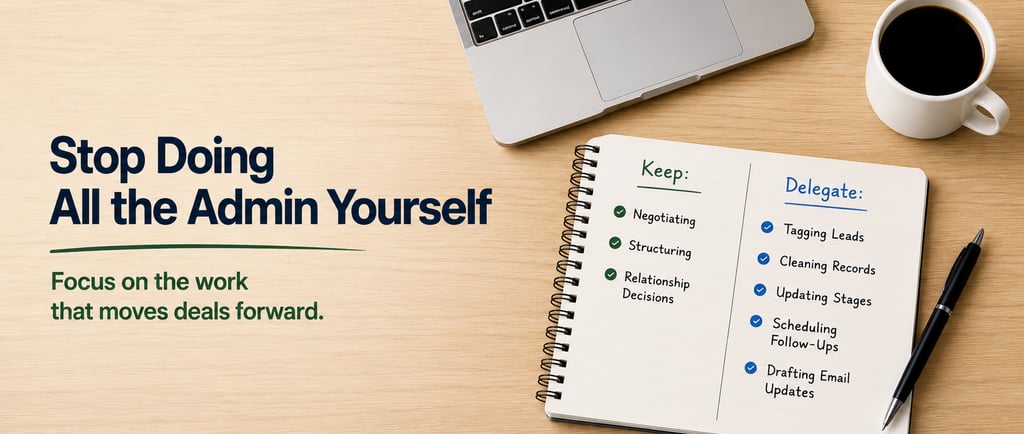

Here's a pattern that shows up constantly with creative finance investors and wholesalers: they're buried in work, but the work that actually moves deals forward isn't getting done.
They're updating contact records. Hunting for missing notes. Shuffling leads between pipeline stages. Cross-referencing spreadsheets. Setting follow-up reminders. Trying to remember who they promised to email.
Meanwhile, the motivated seller who deserves a thoughtful follow-up doesn't get called. The deal that needs a creative structure sits unfinished. The buyer list goes cold. The private lender relationship quietly fades. The investor ends the day exhausted — and still behind.
This isn't a laziness problem. It's a leverage problem.
CRM cleanup and follow-up support aren't overhead. They're force multipliers. When the repeatable administrative work gets handled consistently, you get your time back for the things that actually generate revenue — negotiating, structuring deals, and building the relationships that matter.
The key is knowing exactly what to keep and what to hand off.
Keep the Work That Requires Your Judgment
Not everything should be delegated. Some work requires your experience, your authority, and your read on a situation. Protect your time for tasks where your involvement genuinely changes the outcome.
1. Negotiating With Sellers
A motivated seller conversation isn't a checklist you hand off.
You need to hear what the seller is actually saying beneath the surface. Are they worried about repairs? Are they behind on payments and embarrassed about it? Do they need cash fast, or would monthly income actually serve them better? Are they emotionally attached to a property they've owned for decades? Are they close to a decision, or do they just need someone to help them think it through?
These conversations require empathy, real-time adjustments, and the ability to build trust with a stranger in under 20 minutes. An assistant can prep the lead record, organize property details, and get the call on your calendar. But the conversation itself belongs to you — or a trained acquisitions closer you've invested in developing.
Your job in that call is to understand the seller's real priorities and guide the conversation toward a solution that actually works for both of you.
2. Structuring Creative Deals
Creative finance isn't plug-and-play.
A lead might work as a seller finance deal, a SubTo, a wrap, a lease option, a novation, a wholesale assignment, or a referral — and figuring out which one requires you to hold a lot of variables at once. Mortgage balance, monthly payment, interest rate, arrears, seller timeline, exit strategy, buyer demand — the right structure depends on how all of those pieces fit together.
That's strategic thinking, not data entry.
An assistant can absolutely organize the information you need to underwrite a deal — making sure the mortgage details, seller notes, and property info are complete and easy to find. But the decision about which structure makes sense? That stays with you.
Think about it this way: your best use of time is not digging through old text threads looking for the seller's mortgage payment. It's reviewing clean, organized information and deciding how to solve the deal.
3. Making Relationship Decisions
Real estate investing runs on relationships. And relationship decisions require context that only you have.
Which lender is the right fit for this particular deal? Which buyer should see this opportunity first? Is this the right moment to bring in a JV partner, or does the deal need more clarity before you make that call? Does this seller need more time and patience before you follow up again?
An assistant can keep your buyers, lenders, and partners organized, tag contacts, draft updates, and flag who needs attention. But you decide how to manage the relationships that matter. That judgment can't be templated.
The goal isn't to remove yourself from the business. It's to protect your time for the parts of the business where your presence actually changes things.
Delegate the Repeatable Work
Plenty of CRM and follow-up tasks don't require your judgment — they require consistency. And consistency is exactly what breaks down when you're trying to do everything yourself.
These tasks feel small. But when they get neglected, leads get lost, follow-ups fall through the cracks, and opportunities quietly die.
Here are five things you should be handing off.
1. Tagging Leads
Every lead in your CRM should be easy to find, easy to understand, and easy to act on.
An assistant can tag seller leads based on motivation, property type, market, status, and deal strategy — so when you need to move quickly, you're not digging.
Tags worth using:
Tired landlord, vacant property, preforeclosure, inherited property
Low equity, behind on payments, needs repairs
Open to creative terms, long-term nurture
Seller finance, SubTo, lease option, cash offer
Good tagging means the right lead surfaces at the right moment instead of getting buried under everything else.
2. Cleaning Contact Records
Duplicate records, incomplete phone numbers, missing emails, scattered notes, outdated information — these things make your CRM feel untrustworthy. And when you can't trust your system, you stop using it the way you should.
An assistant can run regular cleanup and handle:
Merging duplicate contacts
Standardizing property addresses
Adding missing contact info
Moving notes into the correct record
Removing invalid entries
Flagging incomplete records that need your review
When you open a lead record, you should be able to find what you need immediately — not spend three minutes piecing together what happened.
3. Updating Pipeline Stages
A lead that sits in the wrong stage for three weeks isn't just messy — it's invisible. Nobody acts on it because nobody knows what it needs.
An assistant can update pipeline stages after calls, follow-ups, and underwriting reviews, keeping your pipeline an accurate picture of reality rather than a snapshot from two weeks ago.
The strategic decisions still belong to you. But once the next step is clear, someone else can make sure the CRM reflects it.
4. Scheduling Follow-Ups
A lead with no scheduled next task is a lead waiting to be forgotten.
An assistant can create follow-up tasks based on your instructions and flag anything that's overdue before it becomes a problem.
That might look like:
Call seller Friday morning
Text seller after spouse reviews the offer
Request mortgage statement
Follow up once the listing expires
Check in again in 30 days
Send to underwriting
Ask buyer for proof of funds
A clean task list means you start every day knowing exactly what needs to happen — instead of spending the first hour trying to figure it out.
5. Drafting Email Updates
Your network shouldn't only hear from you when you desperately need a buyer, a lender, or a closing partner. By then, you're asking cold. Relationships are built in the quiet moments before the urgent need.
An assistant can draft weekly, biweekly, or monthly updates for your buyers, lenders, and referral partners covering new deals under review, opportunities needing buyers or funding, markets you're targeting, recent wins, and how people can work with you right now.
You review it, approve it, and send it. You're not starting from a blank page every time, but you're still in control of what goes out.
Start With a Simple Delegation System
You don't need an elaborate setup to start. Keep it simple.
Pick one CRM cleanup session per week. Have your assistant review active leads, overdue tasks, incomplete records, missing tags, and stale pipeline stages.
Adopt one standing rule: every active lead must have clean notes, the correct stage, and a scheduled next task. That's it. If a lead doesn't meet that standard, it gets fixed before the review session ends.
You can also build a quick daily handoff habit. After a seller call, send your assistant the key details and your next-step instructions. They update the CRM, schedule the follow-up, and flag anything that still needs your eyes. You stay involved without carrying the full weight of the admin.
The Bottom Line
Doing everything yourself might feel like the responsible move. But at a certain point, it becomes the thing that's holding you back.
Your time is most valuable when you're negotiating with sellers, structuring creative deals, and building the relationships that create deal flow. Tagging leads, cleaning records, updating pipeline stages, scheduling follow-ups, and drafting email updates — all of it matters, but none of it needs to be done by you.
Administrative support isn't just about saving time. It's about protecting your pipeline.
When your CRM is clean and your follow-up process actually runs the way it should, you can focus on the work only you can do and stop losing deals because you were too busy managing the details to close them.