
The Follow-Up System Every Creative Finance Investor Needs
Creative finance deals often take more than one conversation. This post outlines a simple follow-up system for nurturing seller finance, SubTo, wrap, lease-option, and low-equity leads so you can stay organized, reconnect at the right time, and turn more opportunities into contracts.

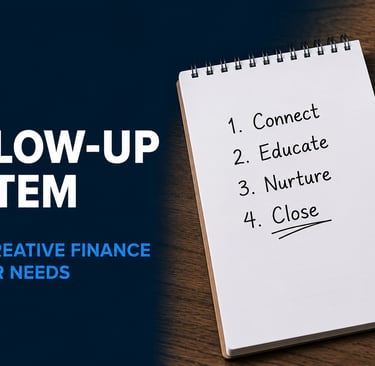
Most creative finance deals don't happen on the first phone call.
A seller might be interested in selling but unsure about carrying financing. A homeowner with a low-interest mortgage may need time to wrap their head around a subject-to offer. A landlord might be open to a lease option but not ready to move until a tenant leaves. A low-equity seller may reject a creative solution upfront because they're still holding out for a traditional cash sale.
None of that means the lead is dead.
It means the lead needs a longer nurture cycle.
Cash buyers tend to focus on speed. Make an offer, follow up a few times, move on if the seller doesn't respond. That approach works fine for distressed sellers who need a fast close, but it leaves serious money on the table when you're working seller finance, SubTo, wraps, lease options, and low-equity properties.
The most profitable creative finance investors understand one thing clearly: creative finance leads are rarely one-call closes. The money is in structured follow-up.
Why Creative Finance Leads Take Longer
A cash offer is simple for a seller to evaluate. You name a price, explain the timeline, and they decide yes or no.
Creative offers require real conversation.
A seller finance lead wants to understand the down payment, monthly payment, interest rate, balloon term, taxes, insurance, and what happens if the buyer stops paying.
A SubTo seller needs reassurance that the mortgage will keep getting paid, the property will be maintained, and the whole process will be handled professionally.
A seller considering a wrap may need time to understand how the existing loan stays in place while the buyer makes payments under a new agreement.
A lease-option seller might like the concept but need time to compare it against listing the property, renting it traditionally, or waiting to see what the market does.
Low-equity sellers often need the most follow-up of all. A cash offer frequently can't solve their problem because there isn't enough room to pay off the mortgage, cover closing costs, and still leave them with the number they need. Creative finance starts looking a lot more attractive after the property sits on the market, a buyer falls through, or the seller realizes their other options aren't what they hoped.
Your job isn't to pressure anyone. Your job is to stay organized, stay helpful, and stay visible until the timing shifts.
Start With a Simple Pipeline
You don't need a complicated CRM to manage creative finance leads. You do need clear stages.
A pipeline like this works well:
New Lead → Contacted → Needs Follow-Up → Offer Discussed → Creative Option Identified → Contract Sent → Under Contract → Closed → Dead/Archive
The most important stage in the whole pipeline is Needs Follow-Up.
Every lead sitting in that stage should have three things:
A next follow-up date
A short note explaining the seller's situation
A clear next action
For example:
Seller situation: Property has a 3.2% mortgage. Seller moved out of state and the house is vacant. Interested in selling but uncomfortable with SubTo. Next action: Send a simple explanation of how payments are handled and call again next Tuesday. Follow-up date: June 9
Without those details, you're not managing a lead. You're just hoping you remember it later.
Tag Leads by the Problem You Might Be Able to Solve
Creative finance follow-up gets much easier when your leads are tagged properly.
Useful tags to use:
Seller Finance Potential
SubTo Potential
Wrap Potential
Lease Option Potential
Low Equity
Vacant Property
Tired Landlord
Behind on Payments
High Days on Market
Price Reduction
Needs Time
Follow Up After Tenant Moves
Follow Up After Listing Expires
Tags help you prioritize the right conversations at the right time.
A seller with a low-interest mortgage and very little equity may be a weak cash-offer lead but an excellent SubTo candidate. A free-and-clear property owner who wants steady monthly income may be a strong seller finance prospect. A landlord who isn't ready to sell yet might respond well to a lease-option conversation.
Good tags mean you're leading with the right solution instead of pitching the wrong one.
Use a Follow-Up Cadence That Matches the Situation
Not every lead deserves the same frequency of contact.
A seller who needs to move within 30 days should hear from you far more often than a landlord who says, "Call me after the lease ends in six months."
A simple starting framework:
Hot leads: Every 2 to 4 days
Warm leads: Every 7 to 14 days
Long-term nurture leads: Every 30 to 60 days
Event-based leads: On the specific date that matters
Event-based follow-up is especially powerful for creative finance investors. That might mean:
Calling after the seller speaks with their spouse
Following up when a listing expires
Checking back once the tenant moves out
Reconnecting after the seller receives another offer
Calling before a foreclosure deadline hits
Following up after a planned relocation
Revisiting the conversation when the seller drops their price
Your CRM should tell you exactly when to reconnect so none of these moments slip by unnoticed.
Keep Follow-Up Helpful, Not Pushy
You don't need a perfect script. You need a reason to stay in touch.
Try messages like:
"Hey, just wanted to check in and see whether anything has changed with the property. I know you were still weighing your options. Happy to answer any questions if a creative solution might help."
Or:
"Just touching base. Last time we talked, you mentioned wanting to wait until the tenant moved out. Still the plan, or would it be worth revisiting a few options?"
Or:
"I know the cash offer didn't leave you with much after the mortgage payoff. I may have another option that works better if you're open to talking through flexible terms."
The goal isn't to overwhelm anyone with technical language. It's to introduce the right solution at the moment it becomes relevant. Timing matters as much as the offer itself.
Document Every Conversation
After every call, text, or email, add a brief note to the record.
You don't need to write paragraphs. Just capture the details that will matter when you come back to this lead in two or three weeks:
What does the seller want?
What's preventing them from moving forward?
Which creative option might solve the problem?
Who else is involved in the decision?
What should happen next?
When should you follow up?
Good notes let you restart the conversation naturally instead of starting from scratch.
Instead of calling and saying, "I'm just following up," you can say:
"Last time we spoke, you were waiting to see whether your agent could find a buyer before considering seller financing. Just wanted to check in and see how things are going."
That lands differently. It feels personal because it is personal.
Review Your Follow-Up List Every Week
Set aside 30 minutes once a week to go through your creative finance leads.
Look for:
Leads with no next task scheduled
Leads that haven't been touched recently
Sellers whose circumstances may have shifted
Properties with recent price reductions
Listings that are close to expiring
Low-equity leads that got incorrectly marked as dead
Older leads that deserve a fresh conversation
A "no" today can become a "yes" three months from now when the seller's situation changes. The investor who stays organized and keeps showing up is often the one who gets the call when the seller finally decides they're ready.
The Bottom Line
Creative finance investors don't need more random leads. They need a reliable system for following up with the leads they already have.
Seller finance, SubTo, wraps, lease options, and low-equity deals take time. The seller may need more information, more trust, or a change in their circumstances before they're ready to move. That's not a reason to give up on a lead. It's a reason to build a system that keeps you in the game long enough to be there when the moment arrives.
Build a clear pipeline. Tag each lead properly. Schedule the next task. Keep your notes updated. Review your follow-up list every week.
The deal probably won't happen on the first call.
But with the right system, you'll still be there when the seller is ready.